Thursday, March 7, 2013

The Pros and Cons of Temporary, (School)Work Induced Insanity, or, Update Number Three

Hello, dear readers.

Once again, I am here to reassure you that I have not ceased to read. In the immortal language of contemporary slang, you might say shit got real. Very real. And stuff. (Ahem. Had to get that out of my system).

I have weeks--MERE WEEKS--to finish my Master's Thesis. So, yes, I've been reading like a madwoman on a coffee-IV, or like a dog on bacon, whichever floats your boat. I've just been reading chunks of many, varied things instead of whole things.

Don't believe me? Well it's list time, then, isn't it? My read/to be read list:

  1. The Poetics of Space, Gaston Bachelard (partial read)
  2. Blood Meridian, Cormac McCarthy (still reading)
  3. Gardens in the Dunes, Leslie Marmon Silko (TBR)
  4. Detective Agency, Walton and Jones (partial read)
  5. Detecting Woman, Phillipa Gates (partial read)
  6. The Woman Detective: Gender and Genre, Kathleen Gregory Klein (finished)
  7. The Sphinx in the City, Elizabeth Wilson (partial read)
  8. The Lady Investigates, Craig and Cadogan (finished)
  9. The Professor's House, Willa Cather  (finished)
  10. Hark! A Vagrant! Kate Beaton (finished)
  11. The Cats of Copenhagen, James Joyce (finished)
  12. Tropic of Orange, Yamashita (TBR)
  13. The Road, Cormac McCarthy (TBR)
My reader's-intuition tells me you're shaking your head and making disturbing clucking noises to convey your disappointment. How can I have read so few books, you wonder? How can I have read so few fun books, you wonder next?

I stand by my original explanation. But if you want a preview of thoughts on my summer/rest of year reading list, here ya go:

  1. The Easy Rawlins series by Walter Mosely
  2. The Maisie Dobbs series by Jaqueline Winspear
  3. The Dharma Bums, Kerouac
  4. Never Let Me Go, Kazuo Ishiguro
  5. Something by this John Green character I keep hearing about ;)
  6. Black Out and All Clear by Connie Willis
  7. *fingers crossed* Jim Butcher's next book
  8. Random choices from the pile of Ray Bradbury and Roger Zelazny titles I've collected over the past year and have not, as of yet, had a moment to read... (to be honest,  may just re-read the Amber Chronicles because it has been awhile and I miss that world)
 ~The Bookworm

Monday, February 25, 2013

Book Eight: The Female Barber Detective

The Female Barber Detective; or, Joe Phenix in Silver City by Albert. W Aiken, published in dime novel form by Beadle's New York Dime Library, 1895.

TTR: complicated and ridiculous (because I was trying to fix the formatting. The PDF scans I have of the book are very low quality and it really hurts to even look at them for any significant period of time. All in all, I'd say one-and-a-half days of nonstop reading was all it took (even though it was way more spread out than that).

Comments:
If you want a good, obtainable summary of the plot, look up Michelle B. Slung's Crime on Her Mind which also includes a really nifty, informal descriptive bibliography of 104 female detectives.

For now, just know: there is a mustachioed woman; an overly grandiloquent road-agent (highway man); lots of dueling; and disguises.

It is a pretty awesome book; but if you miraculously get your hands on a copy, be forewarned: it was written before the turn of the 20th century, and it's chalk full of racism and sexism to show it. If you want some sort of assessment of why I think it is valuable despite these less-than-acceptable qualities, look up my Master's Thesis in a few months.


Wednesday, February 6, 2013

Book Seven: THE LAND OF LITTLE RAIN


The Land of Little Rain, by Mary Austin. Published in 1903.

TTR: Started 2/2/13 and Finished 2/3/13 (just in time to watch the Superbowl).

Comments:

Oh, you actually want real comments because I was a slacker and didn't give you comments on books five and six you've heard about this book a million times and you're wondering what all of the hype is about?

Let me put it this way: Mary Austin was the National Geographic channel before television and cable existed. If you like naturalist writers like Emerson and Thoreau, you'll love this. If not, you might fall asleep. More than once. And drool all over this beautifully written book.

Austin does an excellent job painting us a picture of the Ceriso and the land around her home--mostly California/Nevada. I really love her descriptions of coyotes and, at the end, her sketches of a couple of settlements/villages. She really captures the weather, the flora, and the fauna. I mean REALLY. I've lived in the West/Southwest for most of my life and ALL of my adult life, so I would know.

Don't be fooled--this is not a novel, there really isn't a plot, and the action is minimal. Despite all of this, it is definitely worth the read. It's also in the public domain, which means I'm linking to a free ebook rather than my typical Amazon link (just click on the title at the top of this post).


Update Number Two: Books Five and Six

Awkwardly enough, I still have not finished Meat Eater, Side Jobs, or The Female Barber Detective. I did, however, finish Sherlock's Sisters and Place: a Short Introduction.

I get the feeling, though, that dense commentary on those very theoretical text might--well--bore the average reader. I will provide a brief commentary on Place: a Short Introduction in a few days, just for the comps section of this blog. If you are interested in Sherlock's Sisters, however, you might just be forced to track down my Master's Thesis (once it's finished). Or, you know, do the common sense thing and just find the book.

Each of these books took me roughly two days to get through, although I was a bit too distracted by my giant pile of grading and my personal homework assignments to keep strict track. (I promise to keep better records for fun books).

On a brighter note, I happened to snatch up a couple of gems while at the local bookstore last week: Black Out by Connie Willis (if you've never read her work, take a look at The Doomsday Book or--I really love this one-- To Say Nothing of the Dog) and Pride and Prejudice and Zombies because I have this strange zombiphilia and I was curious. Okay? Don't be a hater.


Thursday, January 24, 2013

Comp notes: My Antonia

I pulled out my dusty comps note book ( a fat three-ring binder, bursting at the seams with notes) to bring you my notes for My Antonia, and would like to provide the following commentary:

Comps Tip #1: While studying for comps, my advisor gave me this invaluable piece of information and I now pass it on to you, padawan. Don't get lost in the world of the book to the extent that you lose track of its historicity. Books aren't written in vacuums, and to prove that you know your stuff (which is what comps exams are all about) you should be able to trace themes across time periods and place texts in their proper historical context. 


Author: Willa Cather
Date: 1918
(Modern Period text)

Historical Context:

  • 1915, 7 May. Lusitania is sink without warning, losing 1198 out of  1924 passengers. Although tensions run  high even after Germany offer condolences, Wilson says, "There is such a thing as a man being too proud to fight." The U.S. demands reparations, but Germany delays.
  • 1916, In Mexico, Pancho Villa kills 18 American mining engineers whom he has forced off a train. Two months later, he raids towns in New Mexico with a force of 1500 men, killing 17 Americans. General John Pershing pursues Villa across the border in a two-year unsuccessful effort to capture him.
  • 1916, Mexican President Carranza orders U.S. troops out of Mexico.
  • 1917, Wilson proposes "Fourteen Points" for peace in the world.
    • Willa Cather writes My Antonia
    • O. Henry award for the short story established
  • 1918, Spanish Influenza sweeps across the nation,  often spread by troops.
Plot Notes:
Jim Burden and Antonia's relationship as it progresses through the years. Life in a small town, rural life, cirty life. Male/Female life in these places. Class as related to the Farm Girls. Women's relationship with family as opposed to men (Lena provides for her mother, her brother does not). Constant theme of migration (everybody is technically alien here, because they all migrated from somewhere--be it elsewhere in the nation or in the world). Connection between "women" and "land"/"place." Sucess---the Bohemians are eventually much more successful than the anglo settlers because they are willing to do whatever it takes to make it. Portrayed varyingly as honorable and ugly/horrible.

Important Characters:
  • Jim Burden
  • Antonia Shimerda
  • Lena Lingard
  • Josiah/Grandfather Burden
  • Emmaline Burden (grandmother)
  • Otto Fuchs
  • Jake Marpole
  • Mr. and Mrs. Shimerda
  • Ambrosch Shimerda
  • Yulka
  • Marek 
  • Russian Pavel
  • Russian Peter
  • Mr. Harling
  • Francis Harling
  • Mrs. Harling
  • Larry Donovan
  • Wick Cutter/his wife
  • Widow Steavens
  • Anton Jelinek
  • Peter Krajiek
  • Cuzak
Important Themes/Symbols:
The plow in the sun
Language/Culture/othering
Farm Girls vs. City Girls
Stength in Women--gender roles
Love/sex and reputation
Hard work, gendered work
text moves from country to city, text contains a sequential migration

Book Four: MY ANTONIA

My Antonia by Willa Cather, published in 1918.

TTR: aprrx. a week, but in actual hours, about four. Started 1/15/13 and Finished 1/22/13.

Comments:

This is probably one of Cather's more famous works, and if you're a big fan of works like Steinbeck's Grapes of Wrath and/or any of the Transcendentalists such as A Week on the Concord and Merrimack Rivers by Thoreau, then this novel is full of lovely little landscapes/descriptions that you will love.

Cather works with many micro texts within her larger frame narrative, creating the fictional/literary equivalent of something that fascinates people--especially math and science geeks: a fractal. A story within a story within a story, and all of them focused on one theme: migration.

This book is a quick read and written simply, however there are a plethora of meanings and what is on the surface a very straightforward narrative becomes complex in its implications.


Tuesday, January 22, 2013

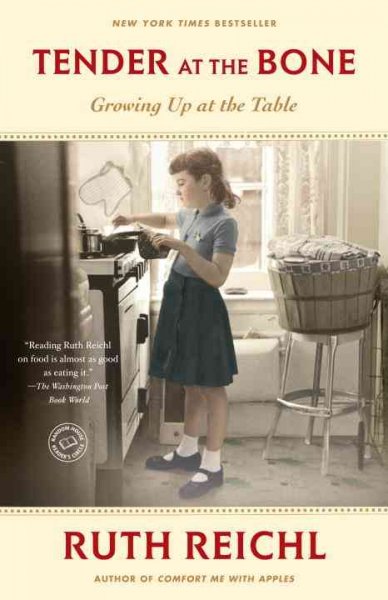
Book Three: TENDER AT THE BONE

 If it seems odd that most of January is gone and I am only posting notes for the third book in my reading journal, it is, but not alarmingly so. Sure, you may all be beginning to doubt my boasts concerning my reading prowess, but fear not Dear Readers, I will prevail in the end.

Tender at the Bone: Growing Up at the Table. by Ruth Reichl, published by Random House, 2010.

TTR: Started 1/19/13 and Finished 1/21/13. (You'll note that my reading times get slower with the onset of school-work and grading).


Comments:

I began reading Tender at the Bone: Growing Up at the Table on Friday (January 19th) after stumbling across it on a free-book table in my friendly University Languages and Literature department. Ah, I love free books. I picked it up because of the old-timey cover, and kept it because of two words on the back, "food" and "hilarious."

Both of those words happened to be true, in terms of this text, which is essentially a foodie's memoir. Stuffed with recipes and garlanded with broad cultural and historical experience, this book keeps you hungry and interested. I've never really read a book about food before, and the experience was an invaluable one not only because it made me rethink the potential "things" I can write about, but also because it made me laugh.

The Bookworm